
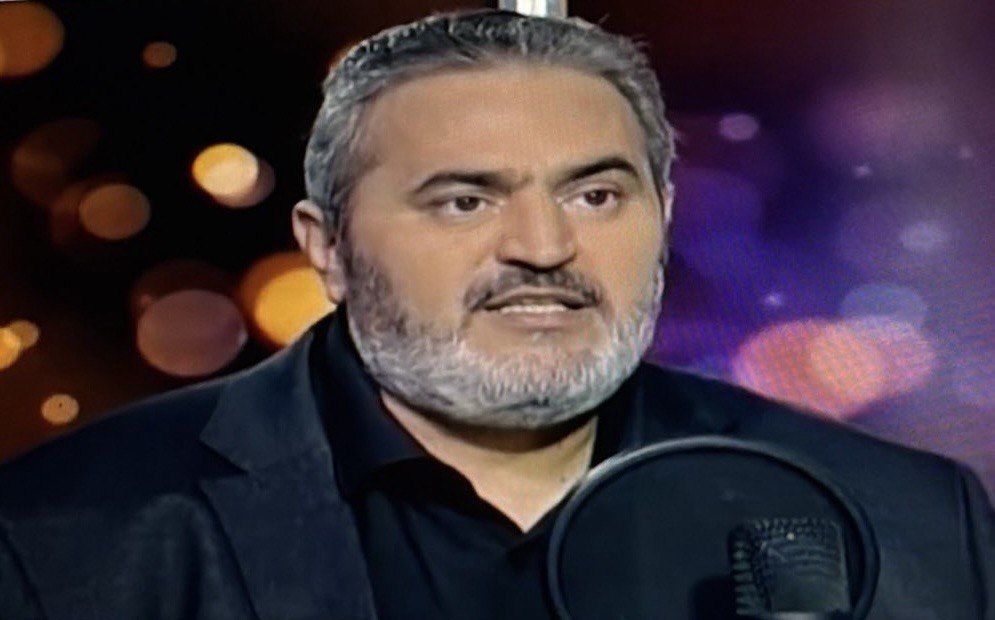
The Empire Is Retreating… and Peoples Are Fighting and Making History
by Khaled Barakat
Thursday, April 16, 2026
Originally published in Arabic at Al-Akhbar
It is no longer accurate to speak of the decline of the U.S. empire as merely an academic analysis belonging to the realm of futurism, as was the case two decades ago. It has become a reality imposed by transformations on the ground and by the steadfastness of peoples confronting domination. If there is one lesson of history, it is the rise and fall of great powers, which are born, age, and die like human beings; empires are not an eternal destiny. After the end of the “Cold War,” the United States sought to impose a unipolar order based on direct military intervention, economic domination, and political subjugation. Some even proclaimed that we had reached the “end of history.” Yet today, the United States faces major challenges, a deep crisis, and wars at home and abroad that shake its foundations and lay the groundwork for the erosion of its status as a sole global pole. The only constant in human societies remains continuous movement: conflict, struggle, and development.
The wars waged by Washington, and by its agent “Israel,” from Iraq to Afghanistan, have exposed the limits of military power. These wars turned into long-term battles of attrition without achieving their declared or hidden objectives; rather, they contributed to strengthening resistance forces and undermining the image of an “invincible power.” Despite capitalism’s “victory” over the Soviet camp, the machinery of aggression did not slow; instead, U.S. wars against peoples multiplied after its global ascendancy.
At the same time, a new world is taking shape on the ruins of unipolarity: the rise of China as a major economic and technological power, the return of Russia as an influential international actor, and the growing dynamism of regional powers such as Iran, India, Turkey, Brazil, and South Africa. This reflects a shift in the balance of power toward a more multipolar system, less subject to U.S. dictates. Moreover, the results of the aggression against Iran have not unfolded as American planners desired; rather, the Islamic Republic will emerge from this war wounded, yet as a central and pivotal force in West Asia and globally.
The facts are becoming sharper and clearer. The ongoing genocidal war in Gaza, and the open U.S. support for the Zionist enemy, have revealed to the world the brutal, violent face of imperialist hegemony when it loses its capacity to impose control, even through total destruction. At the same time, the narratives of “democracy,” “human rights,” and “Western values” have collapsed, exposing the reality that confrontation with Iran and its allies does not resolve the fundamental issues, that power has limits, and that military superiority does not guarantee the realization of fantasies of “overwhelming victory” or “decisive triumph.”
The image of “Israel,” and at its core, the relationship between the U.S. and the Zionist entity, has become an indicator of imperial decline and a subject of questioning within the United States itself, after once being a settled constant in U.S. and European policy. This relationship is in one of its worst conditions historically, and it will not be easy to repair the image of the United States, nor that of the client regimes subordinate to the imperial core, which have also become exposed before their peoples. Nor can smaller states continue to rely on U.S. protection or hide behind normalization projects with the enemy entity.
What is unfolding in the confrontation with Iran has marked a revealing moment of the collapse of the illusion of absolute control. Power is no longer measured solely by the size of military arsenals; it is increasingly tied to deeper factors, foremost among them geography, the course of history, the cultural front, and the presence of political and organizational will. This was clearly demonstrated in the “Strait of Hormuz crisis,” which represents a vital artery for about 20% of global energy. It has become a strategic pressure point capable of disrupting international calculations without a single shot being fired. This recalls the Vietnam War and the 1956 Suez battle and their strategic outcomes for Egypt: colonial powers may win every military battle, yet ultimately lose the war.
Alongside this, another critical factor has emerged: the deepening of popular unity and national, cultural, and religious sentiments in the face of aggression. These too are weapons in the battlefield. Despite political differences regarding Iranian governance, public opinion demonstrated cohesion on the internal front. At the same time, across many Islamic peoples and countries, there has been widespread sympathy with Iran in the face of external pressures and threats. This reflects that the conflict is no longer confined to states and armies but extends into the consciousness of peoples and their alignments. Nations seeking to protect their resources and achieve genuine independence rediscover the weapons of geography and history and recognize that steadfastness and patience are essential for survival and victory.
In parallel, contradictions are widening within the camp of allies themselves. Western powers, especially in Europe, are no longer able to fully align with U.S. policies without conflicting calculations. This reveals fractures within the Western system that has led the international order for decades. These states did not enter into direct war against Iran not because they sided with justice or so-called international law, but because they prioritized their own interests. It is no longer in the interest of Europe or Canada to place all their eggs in the American basket.
Internally, the United States is eroding under the weight of its structural crises: sharp political polarization, economic crises, social tension, and declining trust in institutions. These are not temporary issues or merely problems of governance, but rather expressions of deeper flaws in the capitalist system itself. Today, the United States is burdened by a growing public debt that has reached $39 trillion. Claims about the strength of the American economy are largely illusions promoted by some. The gap between the ruling 1% and the broader society is widening at an unprecedented pace, while the “middle class” is collapsing toward the bottom of the social hierarchy without a protective safety net.
Despite its continued military and financial dominance, the United States is increasingly unable to impose its will. Power is not measured solely by weaponry, but by the ability of a political project to produce and renew its legitimacy, its forces, and its institutions — yet this legitimacy is false and eroding under the weight of wars, massacres, the dominance of banks and transnational corporations, and a new technological system that is pushing millions of workers into poverty and dispossession.
What gives forces such as Hezbollah, Hamas, Ansar Allah, and other Arab and Islamic movements confronting the U.S.-Zionist project growing international presence and a broad popular base of support is their ability to present living revolutionary models that affirm that peoples are capable of resistance and steadfastness despite imbalances in power.
What we are witnessing in the decline of colonial powers is not a sudden collapse, but the inevitable result of the accumulated process of historical erosion of an empire of capital built on the ruins of indigenous populations and oppressed peoples, now facing escalated, organized resistance and the rise of new forces. While Washington seeks to slow this decline through escalation and increasing brutality at home and abroad, the contours of a new world are taking shape. In this context, the question is no longer: Is the American empire declining? Rather: how will nations reshape the balance of power and the global order in the post-American imperial era?
Palestinian writer